BBC Education commissioned Fieldcraft Studios to create social-first content for Tiny Happy People, its flagship early years literacy programme for parents and caregivers of children aged 0–4.
Tiny Happy People is designed to support families across the UK, helping parents understand the role they play in their child’s early language development and encouraging simple, repeatable activities at home that build communication skills over time.
Its theory of change is grounded in a behaviour change approach, using the COM-B model to introduce key behaviours, show how they fit into daily life, and encourage repetition often enough to have a positive impact.
The wider programme is supported by organisations including The Royal Foundation, National Literacy Trust and Newcastle University.
Fieldcraft Studio’s role was to create content that could bring this approach to life on social media, supporting behaviour change through everyday, achievable actions.
The Challenge
Early language development happens in everyday moments. Talking. Listening. Responding. Repeating.
Tiny Happy People’s approach focuses on introducing language-building behaviours, demonstrating how they fit naturally into daily routines, and encouraging families to repeat them often enough to make a difference.
The challenge was translating that thinking into content that felt supportive, not instructional.
There was a particular challenge around reaching young men aged 16–24, including expectant fathers and new parents. An audience often overlooked in early years communications, and less likely to see themselves reflected in traditional parenting content.
Our Approach
We grounded the work in insight.
Fieldcraft Studios combined BBC audience research with our own research which focused on young men aged 16–24, exploring how attitudes, confidence and behaviours shift across key early years stages:
-Pregnancy
-Newborn
-Crawl
-Walk
-Talk
-And the “never stop talking” phase
To support Tiny Happy People’s COM-B-led approach, we used our research to map content ideas directly against the behaviours the programme aims, ensuring each peice of content helped parents feel able to act, see how behaviours fit into real life, and feel motivated to repeat them.
Our research insights shaped the tone, formats and casting choices across the campaign.
Our Solution
Behaviour doesn’t change because of one perfect post.
It changes through repetition.
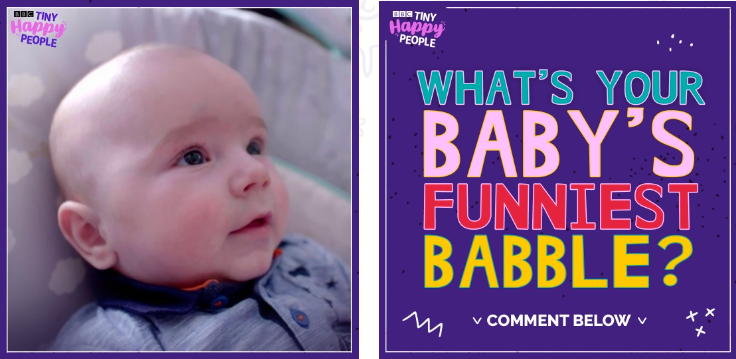
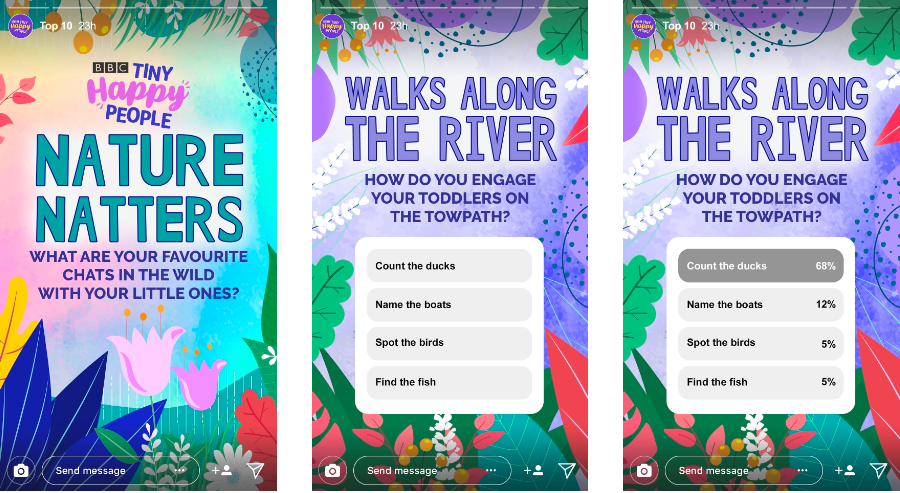
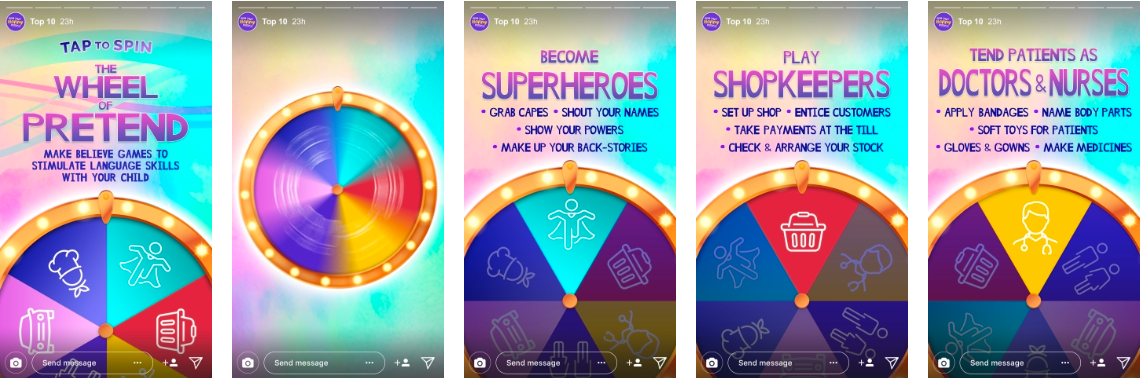
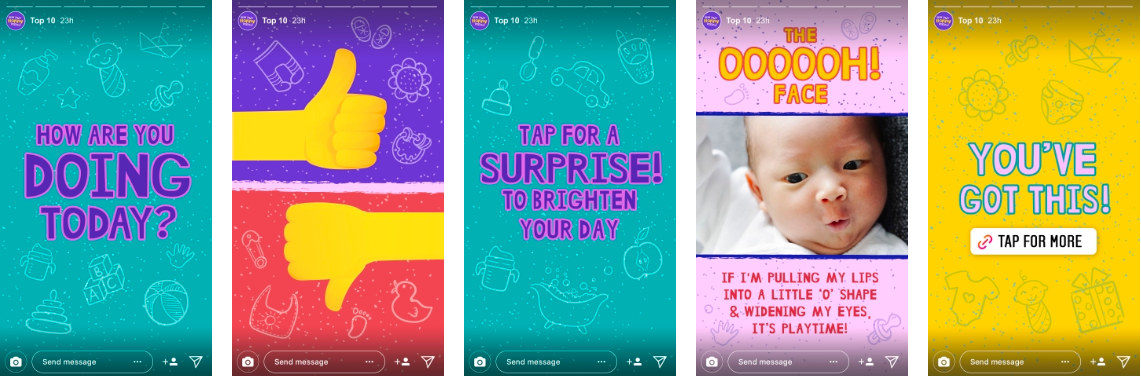
We produced a full suite of content, including live action, animation and static design, created across multiple social formats. Content was built for square and vertical placements, ensuring it could work consistently across feeds, stories and reels, and reinforce key behaviours through repeated exposure.
We created social-first content designed to lower entry barriers and support behaviour change without overcomplicating it.
The work included:
– Casting Dilan, a male midwife chosen for his credibility, warmth and relatability
-A live Instagram Q&A that encouraged open, honest questions
-A suite of Instagram Reels designed to prompt participation and question submission
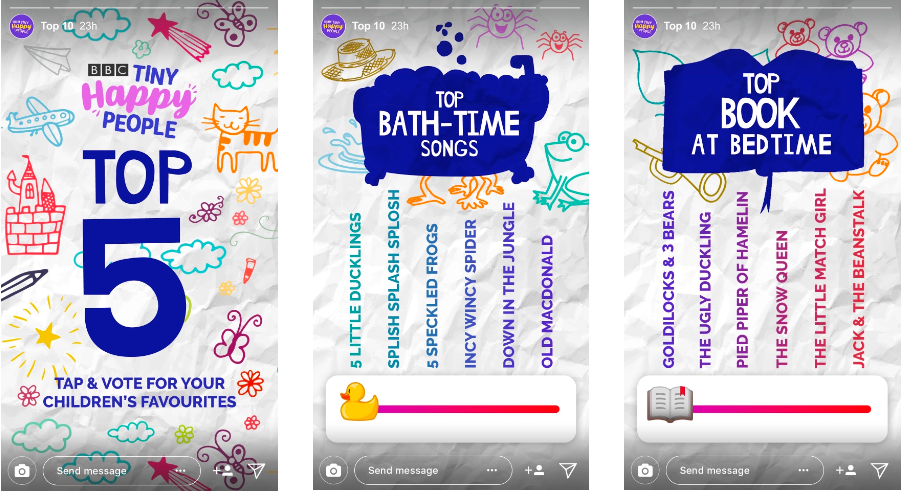
-A suite of interactive animated posts, quizzes and games that demonstrated language-building behaviours in action
Our Impact
The campaign delivered engaging content that resonated with parents and caregivers across Instagram and Facebook, while supporting Tiny Happy People’s theory of change.
The work:
-Reached and engaged young, hard-to-reach audiences
-Sparked conversation and participation
-Supported confidence around everyday language-building behaviours
Delivered on time and within budget, the project shows how Fieldcraft combines audience insight, behaviour-aware thinking and social-first storytelling to produce content that supports real-world change.